
Issue detection and optimized pumping-unit control across various asset types
Independent operators in Texas and Oklahoma running vertical and horizontal rod pump wells needed automation that could handle difficult downhole conditions including gas slugging that traditional pump-off controllers struggle to manage. Amplified's IoT well controller was deployed across both states with no existing SCADA or telecom required, delivering real-time monitoring, well optimization, and active rod lift control.
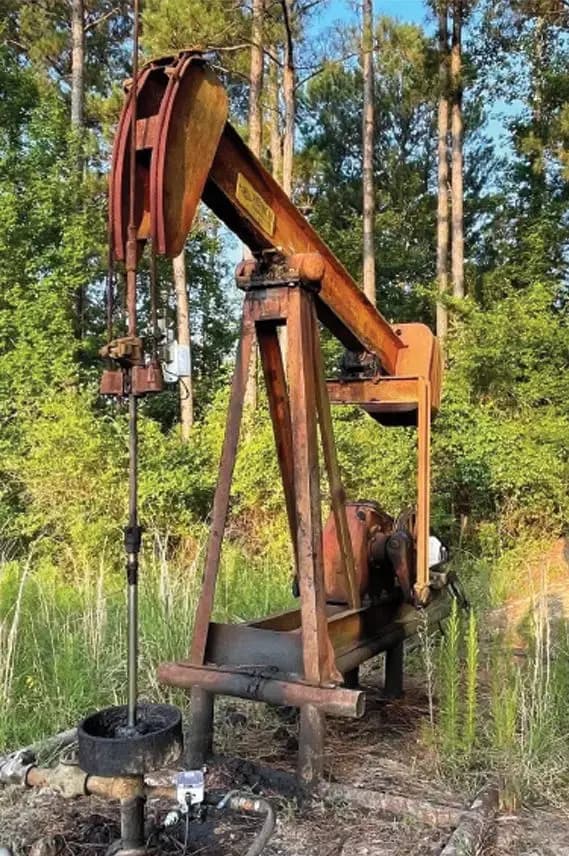
- Location: Texas & Oklahoma
- Asset type: 2000s and 2010s vintage horizontal & vertical wells
- Product focus: Connected smart controller, platform features including visualization and automated diagnosis
Before Amplified Industries
Our customers are a group of independent oil & gas operators based in Texas and Oklahoma with a mix of conventional vertical and unconventional horizontal wells, mostly drilled in either the mid-2000s or mid-to-late 2010s. With these assets continuing to move down the decline curve and becoming more difficult to efficiently produce, our customers were looking for a modern system that was both cost effective and easy to adopt at scale, but also, in the case of the horizontal wells, able to cope with the difficult slugging conditions that more expensive traditional controllers struggle to manage.
Solution
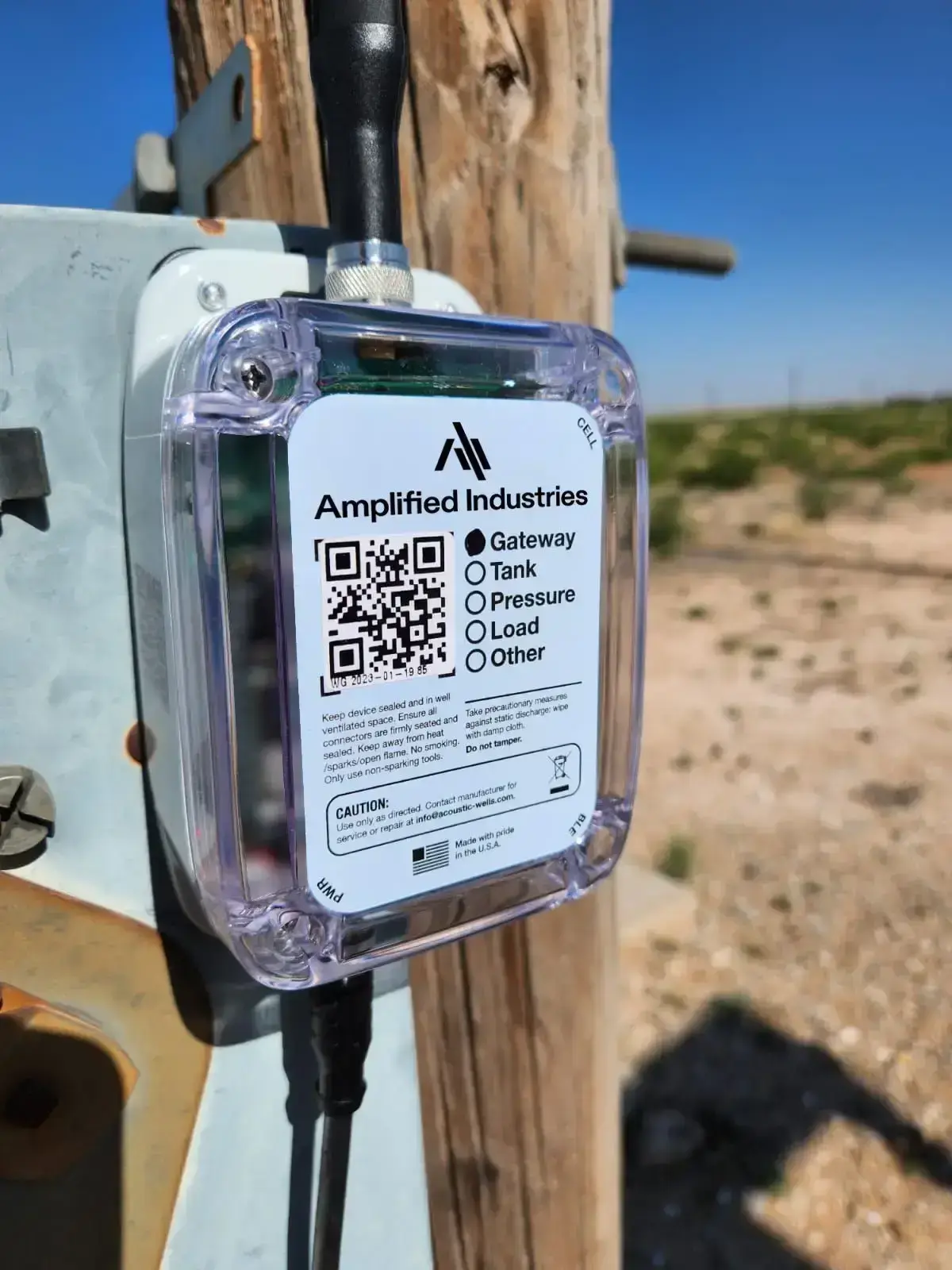
Amplified Industries deployed its full system including well package and tank monitoring system (collectively the Amplified Wells solution) across a selection of leases in Texas and Oklahoma. Each system takes less than 30 minutes to install and includes everything required to instrument an asset with no existing monitoring or telecom/SCADA equipment required.
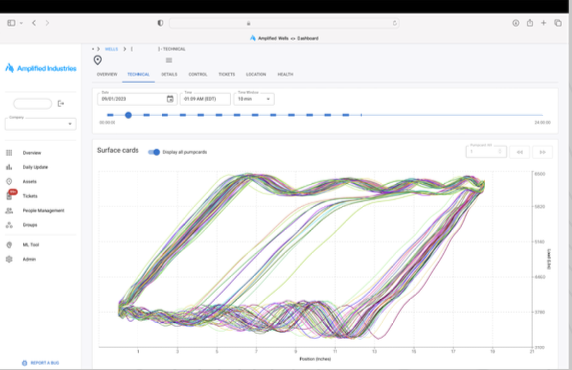
In addition to offering full-field automation and monitoring, our system also provides users incredible depth of data, including the ability to detect, diagnose, and optimize around downhole conditions at the wellhead. In this case study, we take a deeper look at some tools in our platform that customers can use to manage issues including traditional production engineering tools brought to the next level.
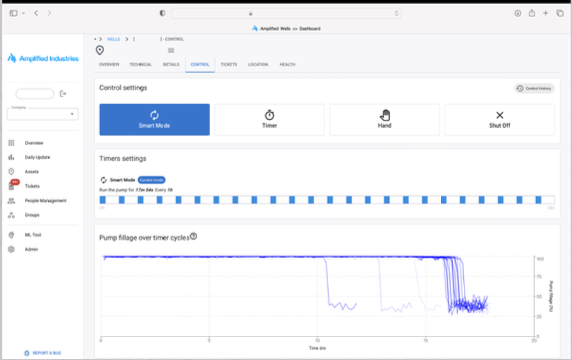
For example, rather than one pump card a day, our system provides a pump card for every stroke allowing users to view how situations evolve over time and how fillage moves cycle-by-cycle.
These tools are available in both our easy-to-use web-based dashboard and mobile applications.
Impact
As soon as our system was installed we found that, similar to our observations on older wells, the vast majority of assets were being run sub-optimally. While a significant portion were found to be underpumping, the more technically demanding subset were the wells that were significantly overpumping.
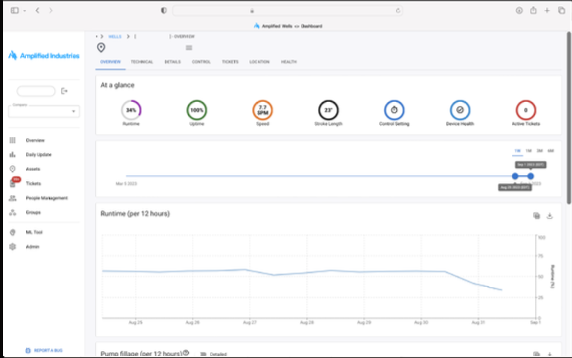
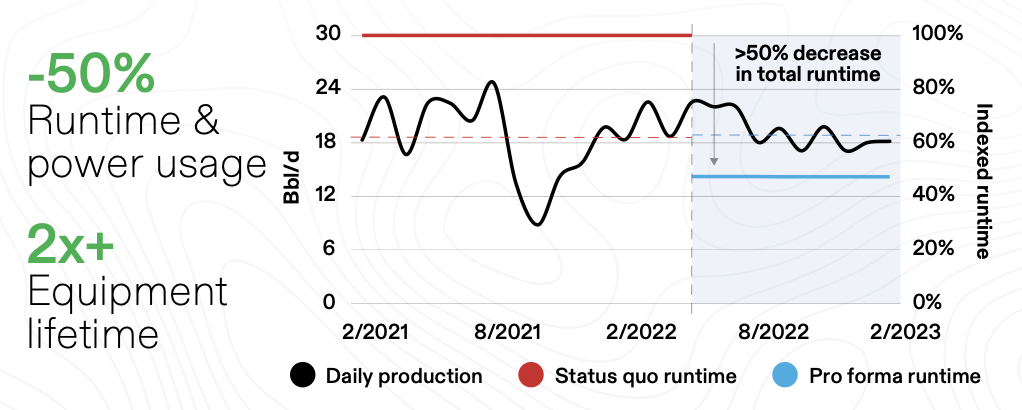
For a subset of wells in central Oklahoma, our control optimization managed to reduce overall runtime by more than 50% while keeping total production unchanged. Not only is electricity usage greatly reduced, estimations show equipment life will be effectively doubled as average pump fillage has increased near 100% and fluid pounding is close to fully eliminated.
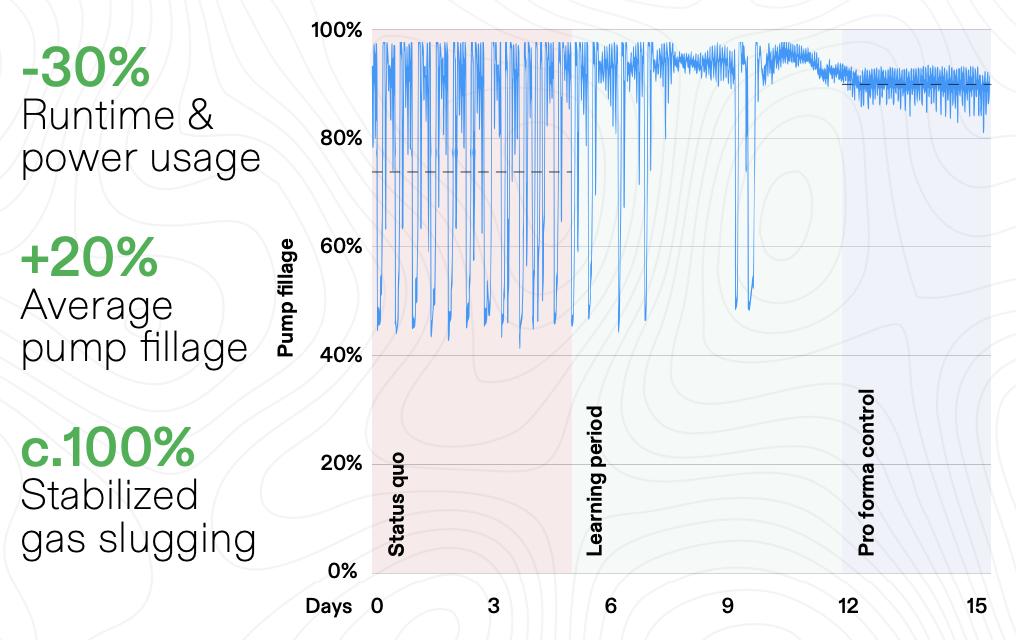
On a series of horizontal wells between west Texas, north Texas, and central Oklahoma, we have seen significant gas slugging behavior that has stumped experienced field technicians and traditional controllers alike. Once our system took over on these wells, including some with full state-of-the-art traditional automation equipment, operators saw a typical runtime reduction of 30% or more with production unimpacted. More importantly, our active control system is able to stabilize the slugging such that the behavior of the wells is much more manageable and predictable, greatly extending equipment life and lowering lifting costs.
Outside of complex, fine-tuned control optimization, our system also automatically detects and alerts the operator of any relevant issues, regardless of whether they are at the surface or downhole.
Simple high impact alerts involve a well not running and detecting exactly why: is it a power outage, has the belt fallen or broken, or has the well's HOA switch simply been left on "off"? More importantly, you will know almost immediately.
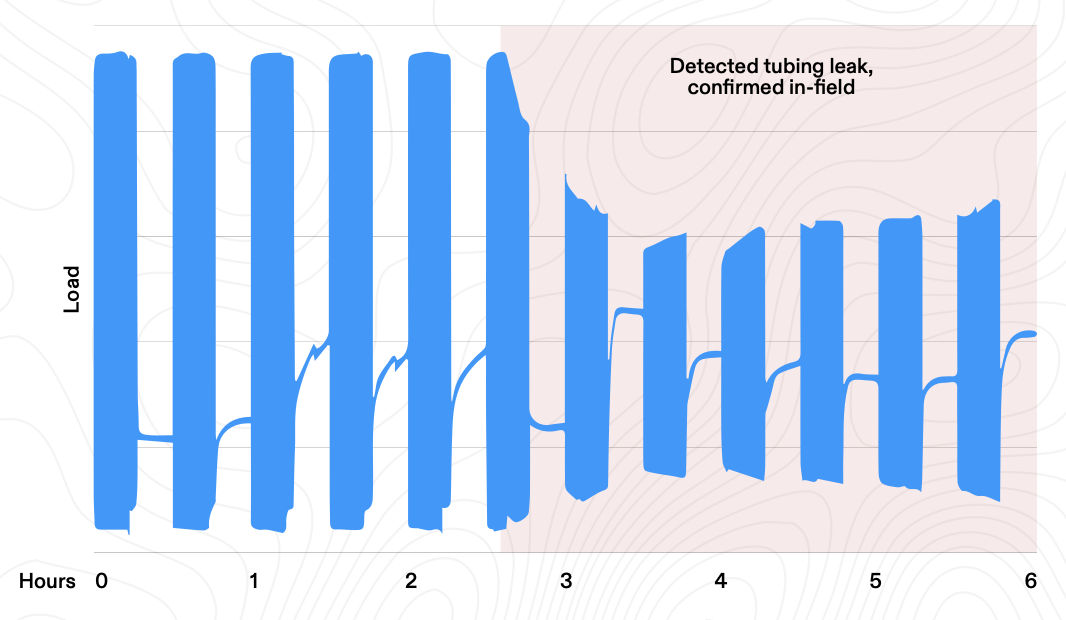
By joining and analyzing our various time-synced data streams, our automatic system can quickly and accurately diagnose typical downhole issues such as tubing leaks/gas lock, slippage/worn barrels, poor traveling or standing valve conditions, rod parts, and general pump inefficiency.
Join the revolution
Eliminate spills, boost your profits and reduce failures with AI built for the oilfield. Let’s talk about what your operation needs.